Medical genetics and genomic medicine
An academic department combining clinical genetics practice, a comprehensive genomic diagnostic laboratory, specialty training and an active research programme.
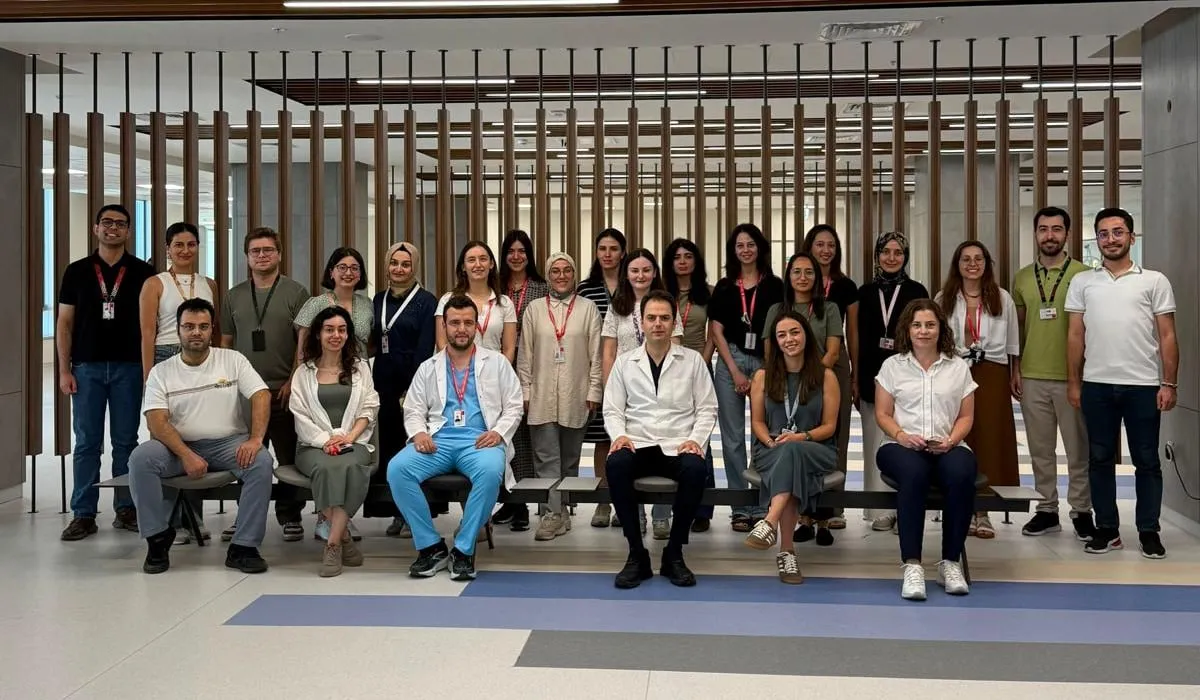
The department
The Department of Medical Genetics at Ankara Etlik City Hospital in Ankara, Türkiye, provides clinical genetics assessment and genomic laboratory diagnostics for patients of all ages, and for their families. Medical genetics is a clinical specialty concerned with the diagnosis of inherited and acquired genetic disease, the assessment of risk for relatives and for future pregnancies, and the interpretation of genomic findings in the context of a specific clinical presentation.
The department operates the hospital’s Genetic Diseases Evaluation Centre alongside outpatient clinics in the Oncology Tower and the Women’s Health & Obstetrics Tower. Referrals come both from within the hospital and from surrounding provinces, and span rare disease, cancer genetics, prenatal and reproductive genetics, infertility and recurrent pregnancy loss, and neurological, endocrine, metabolic and immunological disease.
Scientific mission
The department’s research identity rests on two programmes of equal standing: Cancer Genetics & Genomics and Rare Disease Genetics & Genomics. Neither is subordinate to the other. They share a methodological foundation — rigorous variant interpretation informed by population data — and a technological one, spanning sequencing, array, digital PCR and targeted orthogonal assays.
Work in both programmes is deliberately close to clinical practice. Cohort studies describe the variant spectrum encountered in a Turkish referral population; case-level reports expand recognised phenotypes; methodological work addresses the interpretation problems that arise in routine reporting. The department’s current publication database holds 63 records.
Research programmes and themes
Clinical genomic medicine
Diagnostic capability is organised around clinical questions rather than platforms. Germline testing addresses inherited predisposition; somatic profiling characterises alterations acquired by a tumour; cytogenomic analysis resolves chromosomal and submicroscopic imbalance; targeted molecular methods detect variant classes that short-read sequencing handles poorly. A catalogue of 58 phenotype-driven next-generation sequencing panels supports rare-disease and cancer-predisposition testing.
Analytical performance in selected critical assays is monitored through external quality assessment (EQA), including EMQN programmes and QuIP external quality assessment for ESR1 digital-PCR testing.
Clinical genomics capability spectrum
Education
The department delivers a four-year Medical Genetics residency aligned with Türkiye’s national specialty curriculum. 16 residents currently train alongside 9 medical geneticists. Training is longitudinal rather than modular: residents work in the diagnostic laboratory for at least 18 months across the programme, take part in scheduled teaching and literature review, complete the nationally mandated clinical rotations, and develop thesis and project-based research with faculty supervision.
Laboratory infrastructure
The genomic laboratory brings high-throughput sequencing together with array-based copy-number analysis, droplet digital PCR, multi-capillary Sanger sequencing, conventional cytogenetics and automated slide scanning and imaging. Holding these methods in one service means the appropriate technique can be selected for each clinical question, and that findings can be confirmed across independent platforms.
About this website
An independent academic and research website presenting the work of members of the Department of Medical Genetics, Ankara Etlik City Hospital. It is not the hospital’s official website.
It is maintained by members of the department as an academic and research record. It does not provide medical advice, does not accept patient data, and offers no result lookup, sample submission, clinical ordering or genomic file upload. Patients should use the hospital’s official channels; clinicians seeking to discuss a case should use the routes described on the Contact page.